
Review · ETHNO VILLAGE TOURS
Kazakh Ethno-Village Tour
Horsemen, yurts, and mountain air make a memorable day. This six-to-seven-hour outing from Almaty introduces you to Kazakh nomadic customs through food, demonstrations, music, horse riding, and hands-on activities at the Gunny Ethnic Village. I like the good mix of watching and doing, especially the horse show and riding. I also like that a small group of no more than 15 people, plus a separate guide and driver, can make the day easier and more personal.
The main drawback is distance and structure. You spend roughly an hour reaching the village and another hour returning, while much of the cultural program is presented as a theatrical show. That makes it lively and accessible, but it is not the same as visiting a working nomad camp. At $170 per person, the value depends on how much you want a convenient, all-in-one cultural day.
In This Review
- Key points at a glance
- What the Gunny Ethnic Village adds to an Almaty trip
- A morning welcome with warriors and Shashu
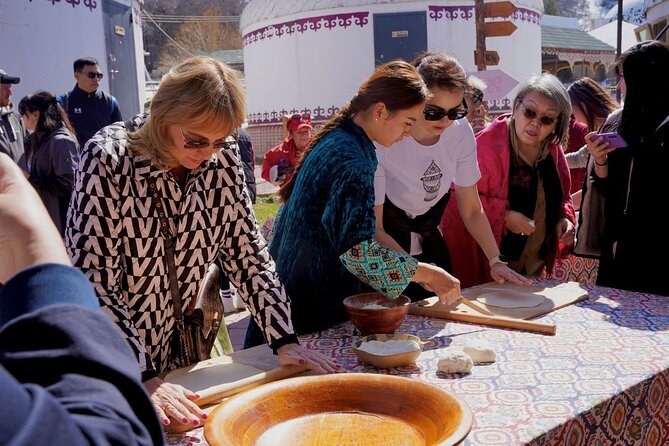
- Making baursaks, the small Kazakh bread treats
- Inside the yurt and the world of nomadic life
- The horse show is the day’s big spectacle
- Lunch with meat served separately
- Archery and a little free time
- Is $170 a fair price?
- Who should book this cultural day?
- Booking, cancellation, and practical details
- Should you book the Kazakh Ethno-Village Tour?
- FAQ
- Where does the Kazakh Ethno-Village Tour take place?
- How long does the tour last?
- Is hotel pickup available?
- What activities are included?
- Is lunch included?
- How many people can join the tour?
- Can I cancel for a full refund?
Key points at a glance
- A theatrical welcome: Warriors in battle armor greet you with the Shashu ritual, a traditional gesture of scattering sweets or gifts to welcome guests.
- Hands-on Kazakh traditions: You can help prepare baursaks, learn how wool is cleaned and whipped, and enter a traditional yurt.
- High-energy horse show: Riders perform mounted stunts and acrobatics, followed by a chance for you to take a short horse ride.
- Kazakh food at lunch: A buffet includes national dishes, with meat cooked and served separately.
- Archery practice: You finish the main program by trying a skill once closely tied to nomadic life.
- Small-group convenience: Pickup is offered, the maximum group size is 15, and the tour returns to Almaty in the late afternoon.
What the Gunny Ethnic Village adds to an Almaty trip
Almaty gives you cafés, museums, parks, and easy access to the Trans-Ili Alatau mountains. It can be harder to find a simple way to learn about Kazakh nomadic life without committing to a long rural trip. This tour fills that gap by gathering several cultural activities in one purpose-built village.
The setting at the foot of the mountains helps. You are not learning about yurts in a city room. You see the traditional dwelling, watch horses work on open ground, eat local food, and take part in activities connected with pastoral and warrior culture.
I would think of the village as a cultural presentation rather than a preserved settlement. The program is designed for visitors, with set times and theatrical elements. That is not a flaw for everyone. If you want clear explanations, photographs, food, and plenty to do in a single day, the format works well. If you want quiet observation or an unplanned encounter with rural families, you may find it too arranged.
The tour is also a useful introduction before more independent travel in Kazakhstan. After a day here, terms such as yurt, baursak, wool work, mounted games, and archery have a practical meaning rather than being just items in a museum display.
More ethno-village visits in Almaty:
- Almaty: Nomadic Lifestyle Experience at Huns Ethno Village
★ 4.8 · 60 reviews - Experience the Nomadic Lifestyle at ‘The Huns’ Ethno-village
★ 4.5 · 25 reviews - Discover Nomadic Lifestyle in ‘The Huns’ Ethno-village
★ 5.0 · 25 reviews
A morning welcome with warriors and Shashu
Hotel pickup usually takes place between 9:30 and 10:00 a.m., with the official start time listed as 10:00. The published meeting point is Shevchenko Street 28 in Almaty, so confirm your pickup details after booking rather than assuming every hotel is included.
The drive to the village takes about an hour. That travel time matters when you judge the price and length of the day, but it also gives you a clear change from city streets to the mountain foothills. The full program runs about seven hours, including transport, and hotel drop-off is scheduled for roughly 4:30 to 5 p.m.
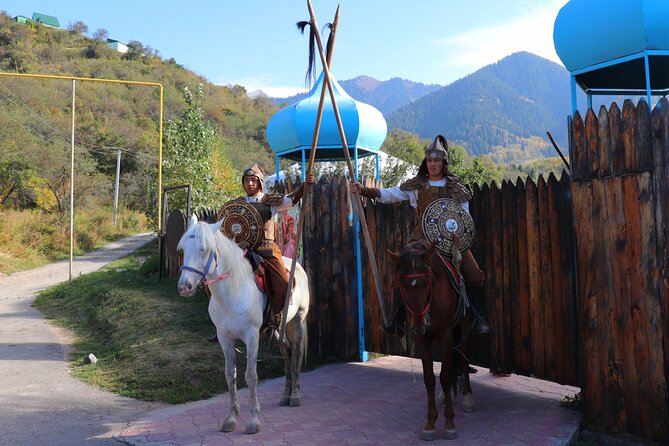
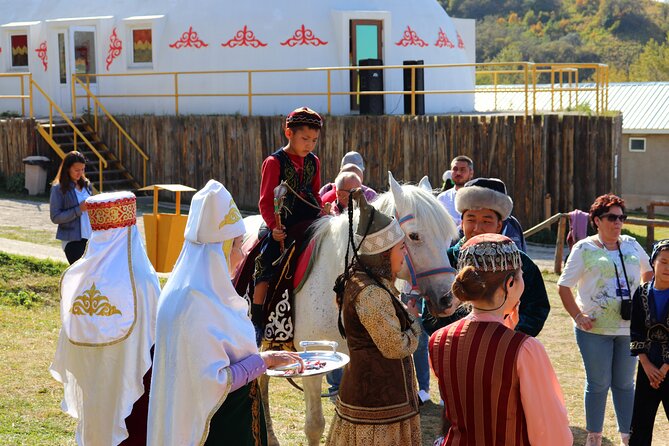
On arrival, warriors in battle armor greet you. The welcome includes the Shashu ritual, a festive custom used to mark a happy arrival. It immediately tells you that this is a staged cultural day, not a standard sightseeing stop.
I like this opening because it gives the village a sense of occasion. You are not simply left to wander among buildings. At the same time, the costumes and ceremony may feel theatrical, so keep your expectations in the right place. The value is in seeing customs explained and performed in a setting made for visitors.
Making baursaks, the small Kazakh bread treats
The first hands-on activity is a baursak cooking class. Baursaks are traditional fried flour products, often served as a snack or alongside a meal. The class gives you a quick, useful connection to Kazakh food culture, since you are not only looking at a finished dish on a buffet table.
This is one of the better parts of the schedule for families and groups of friends. It is easy to understand, does not require specialist knowledge, and gives you something to do soon after arrival. Children may find the cooking activity more engaging than a long explanation about nomadic life.
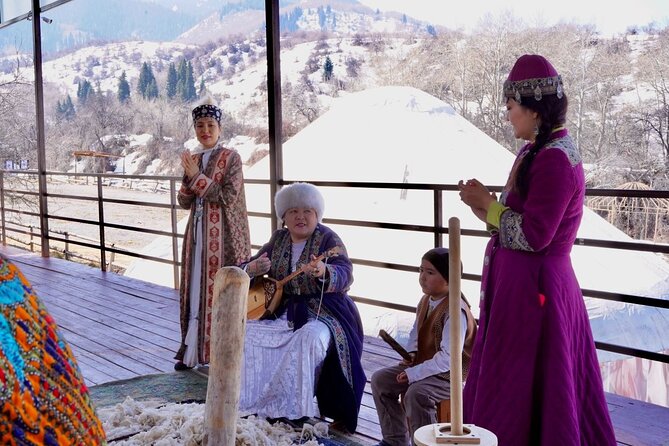
The program also includes a demonstration of cleaning and whipping wool. That detail is important because it connects the yurt and nomadic lifestyle to the work needed for clothing, bedding, and household materials. It is a small activity, but it helps show that traditional life involved constant practical labor.
Do not expect a full cooking course. The day moves on a fixed timetable, with baursak preparation scheduled for about 11:10 and the yurt visit shortly after. You get an introduction, not a slow lesson that takes over the morning.
Inside the yurt and the world of nomadic life
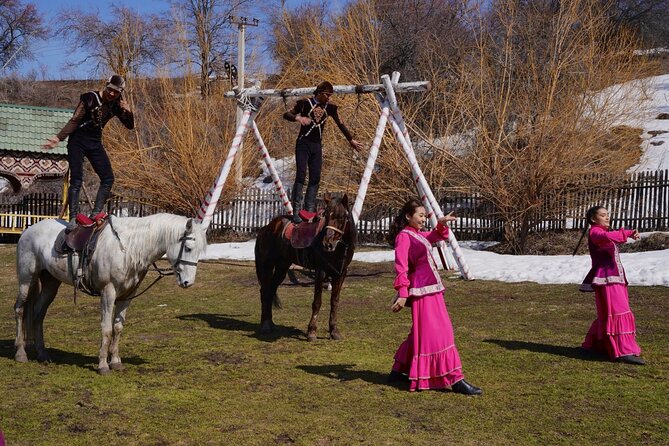
The yurt is the central visual symbol of Kazakh nomadic culture, and the village gives you a chance to see one from inside. You learn about the dwelling and how it fits into the mobile life of steppe communities.
A yurt is more than a photogenic round tent. Its design allowed families to create a home that could be taken down, moved, and rebuilt. The visit is valuable because it links architecture to daily life. You can better understand how sleeping, eating, receiving visitors, and storing household items worked in a setting built for movement.
The available program details do not promise a long lecture or a particular display, so the depth may depend on the guide and the pace of your group. Guides named in the feedback include Luba, Sherzhan, Serj, Aman, and Iman. Luba is particularly praised for clear English explanations and for helping people find good viewing spots. Aman is also noted for being punctual, attentive, and helpful during the day.
That human element matters. A cultural village can feel flat without a guide who explains what you are seeing. Ask questions about the yurt, marriage customs, clothing, food, and nomadic traditions while you have the chance. The program has covered these themes in different presentations, and a good guide can tie them together.
More things to do in Almaty:
- Almaty: Charyn Canyon, Kolsay, and Kaindy Lakes Day Trip
★ 4.7 · 1,522 reviews - Kolsai, Kaindy Lakes and Charyn Canyon Small-Group Tour
★ 5.0 · 642 reviews - Almaty: Kolsai-Kaindy Lakes and Charyn Canyons Day Trip
★ 4.7 · 505 reviews - From Almaty: Kolsay, Kaindy Lakes and Charyn Canyon Day Trip
★ 4.6 · 452 reviews
The horse show is the day’s big spectacle
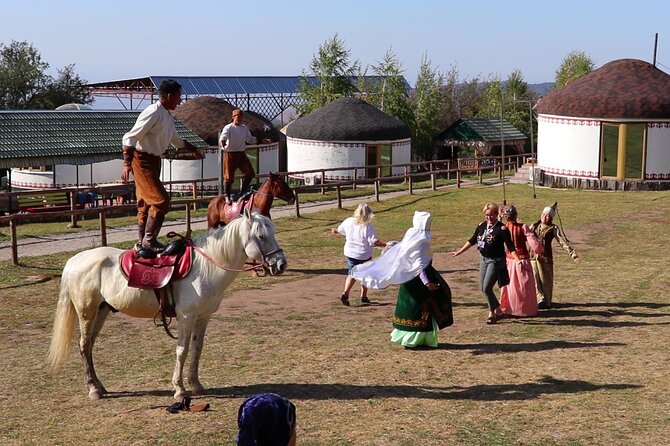
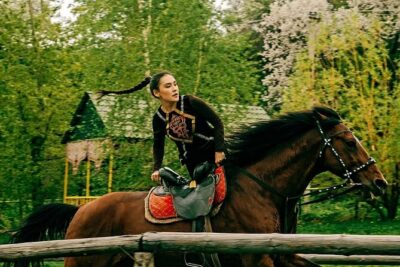
At around noon, the focus shifts to horses. You watch a performance that includes mounted riding and acrobatic stunts, then you can try a short ride yourself. This is the part most likely to become the day’s main memory.
Kazakh culture has a strong connection with horses, and the show makes that connection visible rather than simply explaining it. Riders demonstrate control, speed, balance, and showmanship. The acrobatic moves can be impressive, and the format gives you a lively break after the indoor cultural presentations.
The horse ride is short, so it should not be confused with a trail-riding excursion through the mountains. You get a brief chance to sit on one of the horses and take a ride after watching the professional performance. If riding is your main goal, the tour may feel limited. If you want a taste of the activity alongside food, crafts, and archery, it fits the day well.
Follow the guide’s instructions and treat the riding as an included sample rather than a private riding lesson. The show is the stronger part for spectators, while the short ride adds personal participation.
Lunch with meat served separately
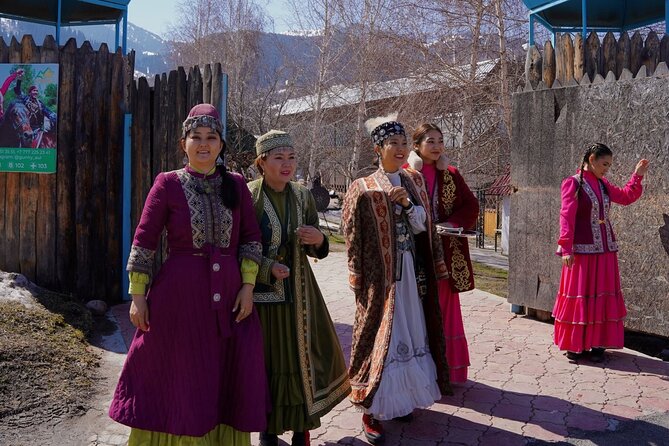
Lunch is scheduled for 1 p.m. and is served as a buffet of national Kazakh dishes. Meat is cooked and served separately, a useful detail for anyone with dietary preferences or restrictions.
The meal gives the cultural program a practical center. Food often explains a society better than a display case, and here you can try local dishes after learning about nomadic life. The available feedback describes the food as good, with particular approval for the overall meal.
Still, you should not book this as a dedicated food tour. The buffet is one part of a full day, and the information provided does not specify every dish or guarantee a vegetarian menu. If you have a serious dietary restriction, ask the operator in advance. The separate meat service may help, but it does not by itself confirm that every side dish meets your needs.
The timing is sensible. By 1 p.m., you have already seen the village, cooked baursaks, and watched the horse show. Lunch gives you a proper pause before the final activity.
Archery and a little free time
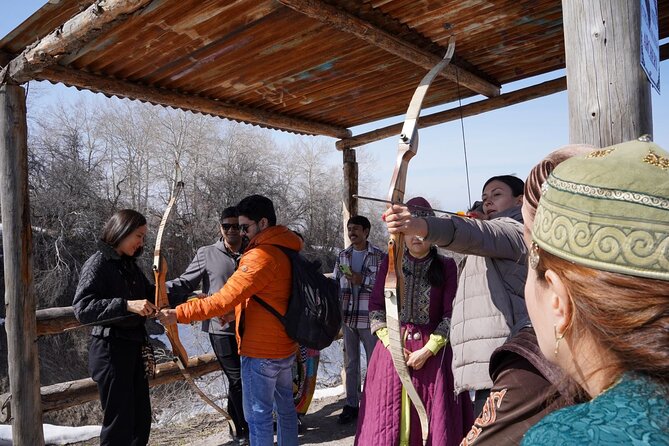
The archery class begins at about 2 p.m. This is another hands-on way to connect with the skills associated with nomadic Kazakh life. You do not need to be an experienced archer to appreciate it. The point is to try the technique, learn how the activity is presented, and see why mounted and ground-based skills mattered in steppe societies.
Archery follows the horse show and lunch, which gives the afternoon a nice change of pace. The morning is mostly cultural explanation and performance. After lunch, you get a quieter activity that asks you to focus and take part.
Free time follows at about 2:30. This is useful for photographs, looking around the village, or simply resting after the busy schedule. Since the tour packs several activities into one day, this unscheduled period helps prevent the program from feeling like a nonstop procession.
Departure is planned for 3:30, with arrival back in Almaty between 4:30 and 5 p.m. Delays are possible with traffic or weather, so I would avoid booking an evening activity that requires a tight connection.
Is $170 a fair price?
At $170 per person, this is not a budget half-day outing. The price makes more sense when you count the included elements: transportation, admission, a guide, the scheduled cultural program, lunch, horse activities, archery, and hotel drop-off. Pickup is offered, and the group is limited to 15 people. Group discounts may also be available.
The separate driver and guide are a useful advantage. Some tour companies combine both jobs, which can limit the guide’s attention and make the driving day harder to manage. Here, the guide can focus on explanations and helping the group, while the driver handles the road. Several guides and drivers, including Luba and Aman, receive strong praise for clear communication, punctuality, and care with the group.
The value is strongest for first-time visitors to Kazakhstan, families, and anyone who wants an organized cultural day without arranging several separate activities. It is weaker if you already have access to a rural Kazakh family, plan to visit several museums, or mainly want a long horseback ride.
The experience is commonly booked about 26 days ahead. That suggests planning early, especially if you want a particular date or need a small-group arrangement. Confirmation is sent within 48 hours, subject to availability.
Who should book this cultural day?
I would recommend it to you if you want an easy introduction to Kazakh customs with plenty of variety. You get food, a yurt, wool work, horses, archery, and a guide in one outing. That range makes it a strong choice for families and mixed-age groups because nobody has to spend the entire day doing only one kind of activity.
It also suits visitors who prefer a guided experience in English. Luba is specifically praised for her English and for explaining Kazakhstan clearly. Other guides, including Sherzhan, Serj, Aman, and Iman, are also singled out for friendly and attentive service.
You may want to skip it if you dislike staged performances or organized group schedules. The village is specially created for cultural presentations, and the day runs by the clock. The horse ride is short, the archery class is an introduction, and the village is reached by road rather than being a remote camp.
The tour is suitable for most people, but the provided information does not give detailed accessibility notes. If you have mobility needs, contact Kazakhstan Guided Tours before booking and ask about the transport, village paths, horse activities, and yurt access.
Booking, cancellation, and practical details
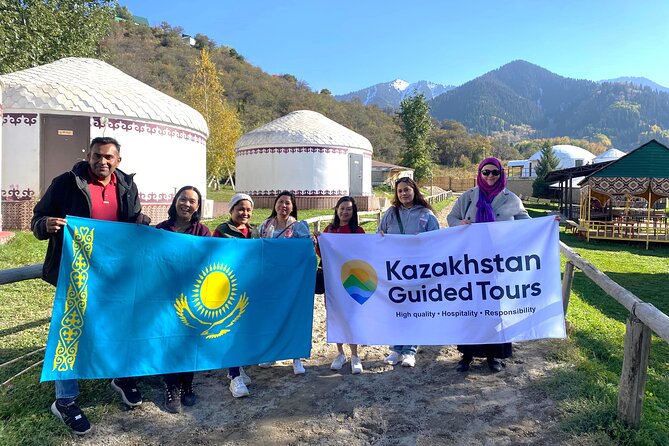
Kazakhstan Guided Tours operates the experience. The maximum group size is 15, which is small enough to make guide interaction possible without promising a private tour.
You can cancel free of charge up to 24 hours before the local start time for a full refund. Changes made within 24 hours are not accepted, and late cancellations are not refunded. The tour requires good weather. If poor weather forces cancellation, you can choose another date or receive a full refund. If the minimum number of bookings is not reached, you are offered another date or experience, or a full refund.
Bring a willingness to participate. The best parts are not passive: you cook baursaks, enter a yurt, watch and try horse riding, and practice archery. Comfortable clothing will make the activity portions easier, though no special equipment details are provided.
Should you book the Kazakh Ethno-Village Tour?
Book it if you want a convenient, lively introduction to Kazakh culture from Almaty. The strongest reasons are the horse performance, the variety of hands-on activities, the national lunch, and the care provided by guides such as Luba and Aman. The 4.8 rating from 22 reviews and 100 percent recommendation record support its reputation for organization and service.
Skip it if you want an unscripted rural encounter or serious horseback riding. At $170, you are paying for transport, coordination, food, entertainment, and a broad cultural program, not for a wilderness expedition.
For most first-time visitors with one free day, I think the combination is worthwhile. It gives you a memorable look at nomadic traditions without requiring complicated planning, and it sends you back to Almaty before dinner.
FAQ
Where does the Kazakh Ethno-Village Tour take place?
The tour visits the Gunny Ethnic Village near Almaty, in a picturesque setting at the foot of the Trans-Ili Alatau mountains.
How long does the tour last?
The experience lasts approximately six to seven hours. The scheduled day begins with pickup around 9:30 to 10 a.m. and ends with hotel drop-off around 4:30 to 5 p.m.
Is hotel pickup available?
Yes, pickup is offered. The published meeting point is Shevchenko Street 28 in Almaty, and the schedule lists hotel pickup between 9:30 and 10 a.m.
What activities are included?
The program includes a Shashu welcome ritual, baursak cooking, a yurt and nomadic-life presentation, wool work, a horse show, horseback riding, lunch, archery, and free time.
Is lunch included?
Yes. A buffet lunch of national Kazakh dishes is included, with meat cooked and served separately.
How many people can join the tour?
The maximum group size is 15 people. Group discounts may be available.
Can I cancel for a full refund?
Yes, if you cancel at least 24 hours before the local start time. Cancellations made less than 24 hours in advance are not refunded. Poor weather or failure to meet the minimum number of bookings may result in an alternative date or a full refund.
Just added in Almaty
- 2 Days Tour: Charyn Canyon & Black Canyon, Kaindy & Kolsay Lakes★ 5.0 · 6 reviews
- 2-Day private Kolsay&Kaindy Lake, Charyn Canyon with stay★ 5.0 · 2 reviews
- mixed tour (walking and using public transports)+museum★ 5.0 · 1 review
- 2 day tour to Altyn Emel Singing Dune and Aktau mountain★ 4.5 · 4 reviews
- 2 Days Private Kolsai and Kaindy Tour★ 5.0 · 4 reviews
- The Charyn River Canyons Adventure Tour★ 5.0 · 1 review
- Transfer from Almaty to Bishkek or Bishkek to Almaty★ 5.0 · 1 review
- Half Day Private Guided Tour in Almaty★ 5.0 · 2 reviews
Ethno Village Tours, compared.
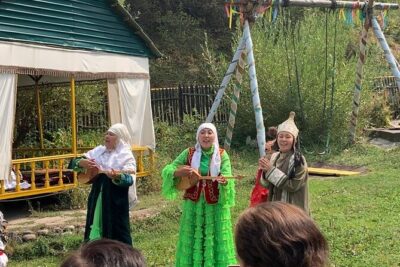
Experience the Nomadic Lifestyle at ‘The Huns’ Ethno-village
Read our review →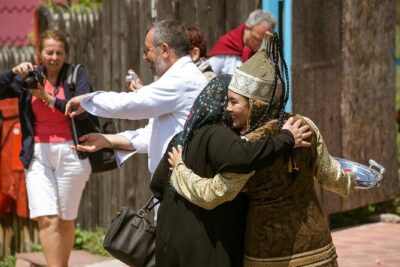
Discover Nomadic Lifestyle in ‘The Huns’ Ethno-village
Read our review →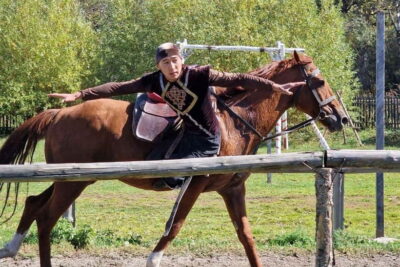

Live show in Huns Gunny Ethno Village with lunch and Troat Farm
Read our review →Browse the lists this tour appears in